

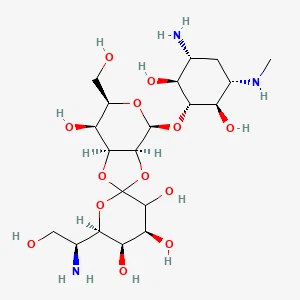
Hangzhou Leap Chem Co., Ltd. is one of the most professional manufacturers and suppliers of hygromycin b丨cas 31282-04-9 in China. Welcome to wholesale bulk high quality chemical products at competitive price from our factory. If you have any enquiry about custom service, please feel free to email us.
Specifications
|
Appearance |
Off-white powder |
|
Purity (HPLC) |
85% min |
|
Activity |
950 u/mg |
|
Specific Rotation |
+18.0° ~ +23.0° |
|
Sulfated Ash |
5.0% max |
|
Heavy Metal |
20 ppm max |
|
Water |
10.0% max |
Transport Information
|
Parameter |
Specification |
|
UN Number |
3462 |
|
Class |
6 |
|
Packing Group |
III |
|
H.S. Code |
2941909099302 |
|
Stability & Reactivity |
The product is chemically stable under standard ambient conditions. |
|
Storage |
Prevent unauthorized access. Keep the container sealed and store it in a dry and well ventilated place. The opened container must be carefully resealed and kept in a vertical position to prevent leakage. See the preventive measures on the label. Electrical installation/construction materials must comply with technical safety standards. |
|
Condition to Avoid |
|
|
Package |
Hygromycin B丨CAS 31282-04-9 is an aminoglycoside antibiotic produced by Streptomyces hygroscopicus. Known for its ability to inhibit protein synthesis in both prokaryotic and eukaryotic cells, it is primarily used as a selective agent in molecular biology and biotechnology. Its unique mode of action and high toxicity to non-resistant cells make it a critical tool in genetic engineering and research.
Applications
1. Molecular Biology and Genetic Engineering
Hygromycin B is widely used for selecting genetically modified cells in both prokaryotic (e.g., E. coli) and eukaryotic systems (e.g., yeast, fungi, mammalian cells). It is effective due to its ability to:
Kill cells that do not express a hygromycin resistance gene (hyg or hph).
Select for cells that have successfully integrated desired DNA constructs.
2. Biotechnology and Industrial Microbiology
In industrial microbiology, Hygromycin B is used to:
Maintain plasmid stability in large-scale fermentation processes.
Control contamination in cell culture systems.
It ensures that only genetically engineered organisms with the desired traits are retained in bioreactors or culture systems.
3. Plant Biotechnology
Hygromycin B is frequently used for:
Selection of transgenic plants, especially in early-stage tissue culture and regeneration.
It is effective in various plant species including rice, tobacco, wheat, and maize.
It is applied to:
Callus cultures
Shoot regeneration media
Seedling screening assays
Plants expressing the hpt/hph resistance gene survive, while non-transformants are eliminated.
4. Antimicrobial Testing and Research
Though not used clinically due to toxicity, Hygromycin B has been used in research to:
Study ribosomal function
Investigate mechanisms of protein synthesis inhibition
Examine resistance mechanisms in microbes
It helps delineate the action of antibiotics on ribosomal machinery, contributing to the understanding of translational control.
Benefits
1. Broad Spectrum of Action
Hygromycin B丨CAS 31282-04-9 inhibits protein synthesis by binding to the 30S subunit of the ribosome. It interferes with translation fidelity, affecting:
Bacteria (Gram-positive and Gram-negative)
Yeast and fungi
Mammalian cells
This broad-spectrum action makes it ideal for universal selection in many host organisms.
2. High Selection Efficiency
Because Hygromycin B is highly toxic to cells lacking the resistance gene, it provides:
Rapid and clear selection of positive transformants
Minimal background growth
Reliable cloning and expression studies
Its strong selection pressure allows researchers to quickly identify and propagate desired genetically modified clones.
3. Stability in Culture
Hygromycin B is stable in:
Aqueous solutions
Cell culture media
Tissue culture conditions
This ensures sustained activity during long-term experiments or industrial fermentation processes.
4. Compatibility with Various Host Systems
Unlike some selective agents, Hygromycin B works across:
Bacteria (e.g., E. coli)
Yeast (e.g., Saccharomyces cerevisiae)
Fungi (e.g., Aspergillus, Neurospora)
Mammalian cell lines
Transgenic plants
Its versatility makes it a top choice for multi-system research environments.
5. Essential for Transgenic Research
In fields like:
Gene therapy
Synthetic biology
Pharmaceutical development
Hygromycin B plays a crucial role in validating and maintaining transgenic organisms, ensuring only cells with functional gene incorporation are retained.
Conclusion
Hygromycin B丨CAS 31282-04-9 is an indispensable tool in modern molecular biology and biotechnology. Its powerful selection capabilities, broad-spectrum activity, and stability make it ideal for applications ranging from gene editing and transfection to industrial fermentation and transgenic plant development. Though not suitable for therapeutic use, it continues to accelerate progress in genetic engineering, synthetic biology, and functional genomics.


