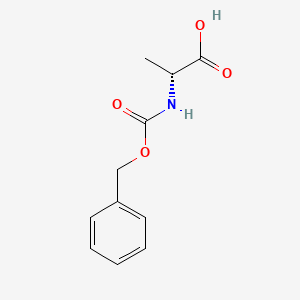
Hangzhou Leap Chem Co., Ltd. is one of the most professional manufacturers and suppliers of 3-chloro-l-tyrosine丨cas 7423-93-0 in China. Welcome to wholesale bulk high quality chemical products at competitive price from our factory. If you have any enquiry about custom service, please feel free to email us.
Specifications
| Appearance | White to off white powder |
| Purity (HPLC) | 98% min |
| Specific Rotation [α]20D | -25° ± 3° (C=0.9 in H2O) |
| Clarity of solution | 0.1 gram in 2 ml 1N HCl clear solution |
| Loss on drying | 2.0% max (80℃, 2h) |
| IR Spectrum | In accordance with the structure |
| Mass Spectrum | In accordance with the structure |
| NMR Spectrum | In accordance with the structure |
Applications
3-Chloro-L-tyrosine is a halogenated derivative of the amino acid L-tyrosine, and it holds significant importance in biochemical, pharmaceutical, and research contexts. It is primarily utilized as a biochemical probe in studies related to oxidative stress, protein modification, and chlorination pathways within biological systems. In clinical and biomedical research, it serves as a marker for the detection of protein damage caused by reactive halogen species, particularly those generated by myeloperoxidase activity during inflammatory processes. This makes it valuable in understanding disease mechanisms linked to oxidative damage, such as atherosclerosis, neurodegenerative disorders, and chronic inflammatory diseases. Additionally, it has potential roles in synthetic organic chemistry and peptide synthesis, where halogenated amino acids are introduced into peptide chains to explore structure–function relationships or to design novel therapeutic analogs. It can also be used in proteomics and mass spectrometry analysis for identifying oxidative modifications in proteins, making it an essential analytical standard in biochemical investigations.
Benefits
The benefits of 3-Chloro-L-tyrosine stem largely from its dual role as a research tool and a biochemical indicator. By providing a reliable biomarker of oxidative and chlorination stress, it enables researchers to evaluate the extent of protein modification in pathological states, thereby contributing to early diagnosis, risk assessment, and disease progression monitoring. Its integration into biochemical studies enhances understanding of cellular defense mechanisms, paving the way for the development of targeted antioxidant or anti-inflammatory therapies. From a therapeutic design perspective, halogenated amino acids like 3-Chloro-L-tyrosine can introduce altered physicochemical properties, such as improved stability or binding affinity, into peptide and protein structures, which can be exploited in drug development. Furthermore, its role in proteomic profiling supports advancements in personalized medicine, where the identification of specific protein modifications can inform tailored therapeutic approaches. In summary, its benefits extend from basic research through translational medicine to potential drug discovery applications.
Conclusion
3-Chloro-L-tyrosine is more than just a chemical derivative of tyrosine; it is a vital research molecule that bridges the gap between fundamental biochemical studies and applied medical research. Its applications in oxidative stress analysis, disease biomarker identification, and peptide engineering demonstrate its versatility across scientific disciplines. The benefits of using this compound include improved understanding of disease mechanisms, enhanced diagnostic capabilities, and opportunities for the development of innovative therapeutic strategies. With its unique role in protein modification studies and potential applications in drug design, 3-Chloro-L-tyrosine represents a valuable tool for advancing both scientific knowledge and medical innovation.