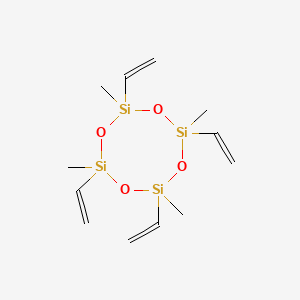
Hangzhou Leap Chem Co., Ltd. is one of the most professional manufacturers and suppliers of 1,1,5,5-tetramethyl-3,3-diphenyltrisiloxane丨cas 17875-55-7 in China. Welcome to wholesale bulk high quality chemical products at competitive price from our factory. If you have any enquiry about custom service, please feel free to email us.
Specifications
| Appearance: | colorless transparent liquid |
| Purity: | 99% min |
Applications
1,1,5,5-Tetramethyl-3,3-diphenyltrisiloxane is a specialty organosilicon compound widely used in silicone chemistry, organic synthesis, and materials science. Its combination of methyl and phenyl substituents on silicon atoms imparts unique properties and reactivities.
1. Hydrosilylation Reactions
This compound contains reactive Si–H (silicon-hydrogen) bonds, which makes it an excellent hydrosilylation reagent:
It adds across unsaturated bonds such as alkenes and alkynes under the catalysis of platinum or rhodium complexes.
Used for introducing silicon-containing moieties into organic molecules, polymers, or surfaces.
Applied in the synthesis of functionalized silicones, organosilicon polymers, and silane coupling agents.
2. Silicone Polymer Synthesis and Modification
Due to its linear trisiloxane backbone and functional groups, it acts as:
A building block or chain extender for silicone elastomers and resins.
A source of phenyl-substituted siloxane segments, which increase thermal stability and mechanical strength of silicone polymers.
An intermediate in crosslinking reactions to improve material toughness, flexibility, and durability.
3. Surface Treatment and Functional Coatings
Its phenyl groups provide enhanced compatibility with organic substrates and improved surface properties:
Used in surface modification agents for glass, metals, and polymers to improve adhesion or hydrophobicity.
Incorporated in protective coatings to enhance resistance to UV, heat, and chemical degradation.
Helps in preparing anti-fouling and anti-smudge coatings with improved optical clarity and durability.
4. Organosilicon Coupling Agents
1,1,5,5-Tetramethyl-3,3-diphenyltrisiloxane is utilized as a coupling agent or intermediate to bond organic polymers with inorganic fillers or surfaces:
Improves dispersion and compatibility of fillers such as silica or carbon black in silicone or rubber matrices.
Enhances mechanical properties and aging resistance of composites.
5. Intermediate in Fine Chemical Synthesis
Acts as a reagent or intermediate for selective functionalization in complex organosilicon syntheses.
Employed in organometallic chemistry for preparing catalysts or ligands with tailored properties.
Its unique structure facilitates the design of specialty siloxane oligomers with precise architecture.
Benefits
The molecular features of 1,1,5,5-tetramethyl-3,3-diphenyltrisiloxane provide several important advantages:
1. Balance of Hydrophobicity and Phenyl Stability
Tetramethylsilyl groups impart hydrophobicity and flexibility.
Diphenyl substitution introduces thermal stability, UV resistance, and rigidity.
This combination results in materials with improved durability without sacrificing flexibility.
2. Reactive Si–H Bonds for Versatile Chemistry
Enables controlled hydrosilylation and crosslinking, essential in tailoring silicone polymers.
Allows fine-tuning of polymer architecture by selective addition to unsaturated sites.
3. Enhanced Thermal and Oxidative Stability
Phenyl groups stabilize the silicon backbone, increasing resistance to:
Thermal degradation (useful at elevated temperatures)
Oxidative and UV-induced damage
Improves lifespan of silicone materials in harsh environments.
4. Compatibility with Organic and Inorganic Phases
Phenyl groups improve interaction with organic matrices.
Silicon backbone offers compatibility with inorganic fillers.
This dual compatibility enhances composite material properties, including strength and toughness.
5. Improved Mechanical Properties in Polymers
Incorporation leads to better elasticity, tensile strength, and abrasion resistance.
Suitable for high-performance elastomers and coatings used in automotive, aerospace, and electronics.
Conclusion
1,1,5,5-Tetramethyl-3,3-diphenyltrisiloxane (CAS 17875-55-7) is a valuable organosilicon compound with reactive Si–H bonds and phenyl-substituted silicon atoms, offering:
Versatile hydrosilylation reagent capabilities
Building block for silicone polymers with enhanced thermal and mechanical properties
Surface modifier improving adhesion and durability
Intermediate for specialty coupling agents and composites
Benefits including hydrophobicity, thermal stability, UV resistance, and mechanical robustness
It plays a crucial role in advanced silicone materials synthesis, surface coatings, and composite formulation in industries such as electronics, automotive, aerospace, and fine chemicals.