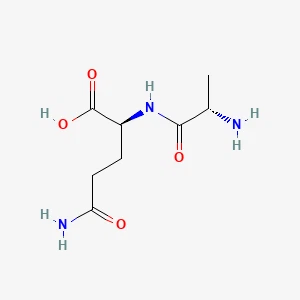

Hangzhou Leap Chem Co., Ltd. is one of the most professional manufacturers and suppliers of uranyl acetate dihydrate丨cas 6159-44-0 in China. Welcome to wholesale bulk high quality chemical products at competitive price from our factory. If you have any enquiry about custom service, please feel free to email us.
Specifications of Uranyl acetate dihydrate丨6159-44-0
|
Property |
Specification |
|
Appearance |
Light yellow to yellow powder |
|
Purity |
98% min |
|
Identification |
HNMR |
Transport Information of Uranyl acetate dihydrate丨6159-44-0
|
Parameter |
Specification |
|
UN Number |
2910 |
|
Class |
7 |
|
Packing Group |
I |
|
H.S. Code |
2918990090306 |
|
Stability & Reactivity |
Having radioactivity |
|
Storage |
Store at RT. |
|
Condition to Avoid |
Do not touch/inhale/take orally, etc |
|
Package |
Introduction
Uranyl acetate dihydrate丨6159-44-0 is a yellow, crystalline solid that is highly soluble in water. Uranyl acetate dihydrate is primarily known for its use in electron microscopy and analytical chemistry, but it also has applications in other scientific fields. Due to its uranium content, it is radioactive and requires careful handling.
Applications of Uranyl acetate dihydrate丨6159-44-0
1. Electron Microscopy:
- Uranyl acetate dihydrate is widely used as a negative stain in transmission electron microscopy (TEM) to enhance the contrast of biological specimens, such as proteins, viruses, and cell structures. It helps visualize fine details at the nanoscale.
2. Analytical Chemistry:
- It is used as a reagent in chemical analysis, particularly for the detection and quantification of certain ions or compounds.
3. Nuclear Industry:
- Uranyl acetate dihydrate is used in the production of uranium-based fuels and other nuclear materials. It serves as a precursor in the synthesis of uranium compounds.
4. Research and Development:
- It is used in scientific research to study uranium chemistry, including its behavior in aqueous solutions and its interactions with other compounds.
Benefits of Uranyl acetate dihydrate丨6159-44-0
1. High Contrast in Microscopy:
- Its ability to provide high-contrast images makes it invaluable in electron microscopy for studying biological and materials science samples.
2. Precision in Analytical Chemistry:
- Uranyl acetate dihydrate is a reliable reagent for detecting specific ions and compounds, contributing to accurate analytical results.
3. Role in Nuclear Science:
- Its use as a precursor in uranium chemistry supports advancements in nuclear energy and materials science.
Safety and Environmental Considerations
1. Radioactivity:
- Uranyl acetate dihydrate丨6159-44-0 is radioactive due to its uranium content. It emits alpha particles, which can be harmful if ingested or inhaled. Proper shielding, handling protocols, and personal protective equipment (PPE) are essential when working with this compound.
2. Toxicity:
- In addition to its radioactivity, uranyl acetate dihydrate is chemically toxic, particularly to the kidneys. It should be handled in a well-ventilated fume hood, and direct contact with skin or eyes must be avoided.
3. Regulatory Compliance:
- The use, storage, and disposal of uranyl acetate dihydrate are subject to strict regulations due to its radioactive and toxic nature. Compliance with local and international guidelines is mandatory.
4. Environmental Impact:
- Improper disposal can lead to environmental contamination. It must be disposed of as radioactive waste through authorized facilities.
Conclusion
Uranyl acetate dihydrate丨6159-44-0 is a valuable compound in electron microscopy, analytical chemistry, and nuclear science. Its ability to provide high-contrast imaging and its role in uranium chemistry make it indispensable in these fields. However, its radioactive and toxic nature requires strict adherence to safety protocols and regulatory guidelines. Responsible handling and disposal are critical to ensuring its benefits are realized without compromising health or environmental safety.