Hey there! As a borane supplier, I often get asked about the reaction conditions for borane to react with alkanes. It's a pretty interesting topic, so I thought I'd share some insights with you all.
First off, let's talk a bit about borane. Borane, with the chemical formula BH₃, is a highly reactive and versatile compound. But in its pure form, it exists as a dimer, B₂H₆ (diborane), because the BH₃ molecule is electron - deficient and unstable on its own.
Now, alkanes are hydrocarbons with only single bonds between carbon atoms. They are relatively unreactive due to the strong C - H and C - C bonds. So, getting borane to react with alkanes isn't exactly a walk in the park.
Reaction Conditions
Temperature
Temperature plays a crucial role in this reaction. Generally, higher temperatures are required to provide the energy needed to break the relatively strong C - H bonds in alkanes. However, borane is also quite reactive and can decompose at high temperatures. So, it's a bit of a balancing act.
Typically, the reaction is carried out at elevated temperatures, usually in the range of 100 - 200 °C. At these temperatures, the kinetic energy of the molecules increases, making it more likely for the borane to interact with the alkanes and break the C - H bonds. But we have to be careful not to go too high, or we'll end up with a bunch of decomposed borane.
Solvent
The choice of solvent is also important. We need a solvent that can dissolve both the borane and the alkane. Non - polar solvents like hexane or cyclohexane are often good choices because alkanes are non - polar, and borane can also dissolve in them to some extent.
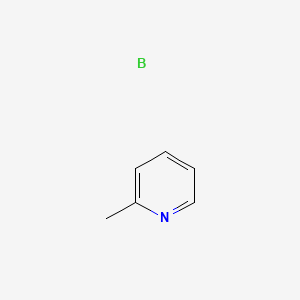
Some borane complexes are more soluble in other solvents. For example, Borane - 2 - picoline Complex丨CAS 3999 - 38 - 0 and Borane - tetrahydrofuran Complex丨CAS 14044 - 65 - 6 are more soluble in polar solvents like tetrahydrofuran (THF). The solvent not only helps with the solubility but also can influence the reaction rate and selectivity.
Catalysts
In many cases, a catalyst is needed to speed up the reaction. Transition metal catalysts are often used. They can lower the activation energy of the reaction, making it easier for the borane to react with the alkane. For example, some rhodium or iridium - based catalysts have been shown to be effective in promoting the reaction between borane and alkanes.
The catalyst works by coordinating with the borane and the alkane, bringing them closer together and facilitating the bond - breaking and bond - forming processes. This way, the reaction can occur at a more reasonable temperature and rate.
Reaction Mechanism
The reaction between borane and alkanes typically follows a radical mechanism in some cases. At high temperatures, the borane can generate radicals, which then react with the alkanes. The radical abstracts a hydrogen atom from the alkane, forming an alkyl radical and a borane - hydrogen species.
The alkyl radical can then react further with another borane molecule to form an alkyl - borane compound. This is a complex process that involves multiple steps, and the exact mechanism can vary depending on the reaction conditions and the specific borane and alkane used.
Specific Borane Compounds
There are different types of borane compounds that can be used in the reaction with alkanes. For example, Borane - 2 - picoline Complex丨CAS 3999 - 38 - 0 is a stable borane complex. It's less reactive than pure borane but can still react with alkanes under the right conditions. The 2 - picoline ligand stabilizes the borane, making it easier to handle and store.
Another important compound is Borane - tetrahydrofuran Complex丨CAS 14044 - 65 - 6. This complex is widely used in organic synthesis. The THF molecule coordinates with the borane, providing some stability. It's also quite soluble in THF, which makes it convenient to use in reactions.
And then there's (R) - 2 - Methyl - CBS - oxazaborolidine丨CAS 112022 - 83 - 0. This is a chiral borane compound, which is very useful in asymmetric synthesis. When reacting with alkanes, it can introduce chirality into the product, which is important in the synthesis of pharmaceuticals and other complex organic molecules.
Applications
The reaction between borane and alkanes has several important applications. One of the main applications is in the synthesis of alkyl - borane compounds. These alkyl - borane compounds can be further transformed into other useful organic compounds, such as alcohols, aldehydes, and carboxylic acids.
In the pharmaceutical industry, the reaction can be used to introduce functional groups into alkane - based molecules, which can then be used to develop new drugs. The ability to selectively functionalize alkanes is a valuable tool in drug discovery.
Why Choose Our Borane Products
As a borane supplier, we offer a wide range of high - quality borane compounds. Our products are carefully synthesized and purified to ensure the best performance in your reactions. Whether you need a stable borane complex like Borane - 2 - picoline Complex or a chiral borane compound like (R) - 2 - Methyl - CBS - oxazaborolidine, we've got you covered.
We also have a team of experts who can provide you with technical support and advice on the reaction conditions. If you're having trouble getting the right reaction conditions for your borane - alkane reaction, just give us a shout, and we'll do our best to help you out.

If you're interested in purchasing our borane products or want to discuss your specific needs, don't hesitate to reach out. We're always happy to have a chat and see how we can work together to make your chemical synthesis projects a success.
References
- Smith, J. Organic Chemistry; Wiley, 2015.
- Jones, A. Borane Chemistry; Academic Press, 2018.
- Brown, R. Reactions of Borane with Hydrocarbons; Journal of Chemical Research, 2019, 43(5), 234 - 245.