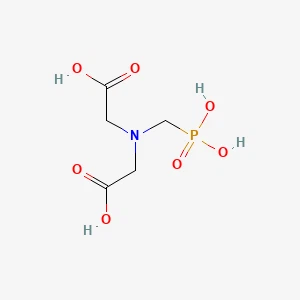
Hangzhou Leap Chem Co., Ltd. is one of the most professional manufacturers and suppliers of boric acid丨cas 10043-35-3 in China. Welcome to wholesale bulk high quality chemical products at competitive price from our factory. If you have any enquiry about custom service, please feel free to email us.
Specifications
| Appearance | White tiny crystal or white crystalline powder |
| Content | 99.6% min. |
| B2O3 | 56.1% min. |
| Sulfate | 0.1% max. |
| Chloride | 0.01% max. |
| Water insoluble | 0.01% max. |
| Fe | 0.001% max. |
Transport Information
|
Parameter |
Specification |
|
UN Number |
|
|
Class |
|
|
Packing Group |
|
|
H.S. Code |
2810002000301 |
|
Stability & Reactivity |
The product is chemically stable under standard ambient conditions. |
|
Storage |
Tightly closed. Dry. Keep in a well-ventilated place. Keep locked up or in an area accessible only to qualified or authorized persons. Moisture sensitive. |
|
Condition to Avoid |
Exposure to moisture |
|
Package |
Manufacturing Information
|
Parameter |
Specification |
|
Capacity |
500MT/month |
|
Frequency |
|
|
Main Export Countries |
|
|
Capacity/Batch |
|
|
Experience |
Production since 2012 |
|
Stock |
Applications
Boric acid is widely used across multiple industries due to its chemical stability and versatile properties. In the glass and ceramics industry, it serves as a fluxing agent, improving durability, thermal resistance, and optical clarity in specialty glasses, fiberglass, and enamel coatings. In agriculture, it acts as a micronutrient for plants, particularly aiding in cell wall development and reproductive growth in crops. It is also applied as an insecticide and fungicide for controlling pests like ants, cockroaches, and mold. In pharmaceuticals and cosmetics, boric acid is used in antiseptic formulations, eye washes, skin creams, and personal care products due to its mild antibacterial and antifungal properties. In metallurgy, it functions as a flux in welding, soldering, and metal finishing. Additionally, it is employed in nuclear power plants as a neutron absorber to help control the fission process.
Benefits
Boric acid offers broad-spectrum utility thanks to its low toxicity to humans when used appropriately, making it a safer alternative to harsher chemicals in pest control and antiseptics. Its thermal stability and ability to enhance glass strength provide significant advantages in manufacturing high-performance materials. In agriculture, it promotes plant health, improving crop yield and quality. Its antifungal and antibacterial properties make it valuable in healthcare and hygiene applications, supporting wound care and infection prevention. As a nuclear neutron absorber, it enhances operational safety in power plants. Its multifunctionality means industries can rely on one chemical for multiple roles, reducing the need for several separate agents.
Conclusion
Boric acid is a highly adaptable compound with roles spanning manufacturing, agriculture, healthcare, pest control, and energy production. Its combination of safety, chemical stability, and performance-enhancing properties ensures its continued relevance in both industrial and domestic applications. By supporting plant growth, improving material performance, and contributing to public health and safety, boric acid remains an indispensable material in diverse sectors.