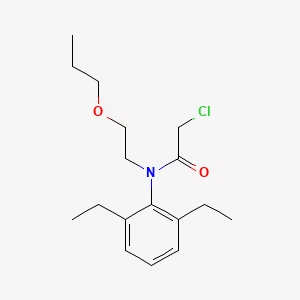
Hangzhou Leap Chem Co., Ltd. is one of the most professional manufacturers and suppliers of glyphosate丨cas 1071-83-6 in China. Welcome to wholesale bulk high quality chemical products at competitive price from our factory. If you have any enquiry about custom service, please feel free to email us.
Specifications
|
Appearance |
White powder |
|
Content of Active Ingredient |
95% min |
|
Formaldehyde content |
1.2 g/kg max |
|
NaOH insolubles |
0.2 g/kg max |
|
N-Nitrosoglyphosate Content |
1.0 mg/kg max |
|
Water Content |
0.4% max |
Transport Information
|
Parameter |
Specification |
|
UN Number |
3077 |
|
Class |
9 |
|
Packing Group |
III |
|
H.S. Code |
|
|
Stability & Reactivity |
The product is chemically stable under standard ambient conditions. |
|
Storage |
Tightly closed. Store in a closed, dry, ventilated place |
|
Condition to Avoid |
|
|
Package |
Introduction
Glyphosate丨CAS 1071-83-6 is a broad-spectrum, non-selective, systemic herbicide widely used in agriculture, forestry, and industrial weed management. Introduced in the 1970s by Monsanto under the trade name Roundup, it is now one of the most widely applied herbicides globally. Glyphosate works by inhibiting the shikimic acid pathway, which is essential for plant growth but absent in animals, making it selectively toxic to plants.
Major Applications
A. Agriculture
Glyphosate丨CAS 1071-83-6 is extensively used in both conventional and genetically modified (GM) crop systems, particularly for:
● Pre-planting and pre-harvest weed control
● Post-emergence control in glyphosate-tolerant crops (e.g., Roundup Ready soybean, corn, cotton, canola)
● No-till and conservation tillage practices
It effectively controls grasses, sedges, and broadleaf weeds.
B. Non-Crop Areas
● Roadsides, railways, industrial yards
● Parks, golf courses, and public spaces
● Residential lawns and gardens (with restrictions in some regions)
C. Forestry and Plantation Management
● Control of invasive vegetation in reforestation projects
● Vegetation management in rubber, palm oil, tea, and coffee plantations
Benefits
A. Broad-Spectrum Control
● Eliminates a wide range of annual and perennial weeds
● Reduces the need for multiple herbicides
B. Systemic Activity
● Absorbed through leaves and translocated to roots, providing complete plant kill
● Effective against deep-rooted and rhizomatous weeds
C. No Soil Residual Activity
● Glyphosate binds tightly to soil particles and becomes inactive, reducing risk to subsequent crops
● Makes it ideal for pre-plant and rotational crop programs
D. Enables Conservation Agriculture
● Supports no-till and minimum-till farming systems, reducing soil erosion, improving soil health, and conserving water
E. Compatible with GM Crops
● Central to the adoption of glyphosate-resistant (Roundup Ready) crops
● Simplifies weed management and reduces tillage
Conclusion
Glyphosate丨CAS 1071-83-6 is a powerful, versatile tool in global agriculture and vegetation management. Its broad-spectrum efficacy, low cost, and compatibility with conservation farming have made it indispensable. However, due to resistance risks and public scrutiny, responsible use-integrated with other weed control methods-is crucial for maintaining its effectiveness and sustainability.